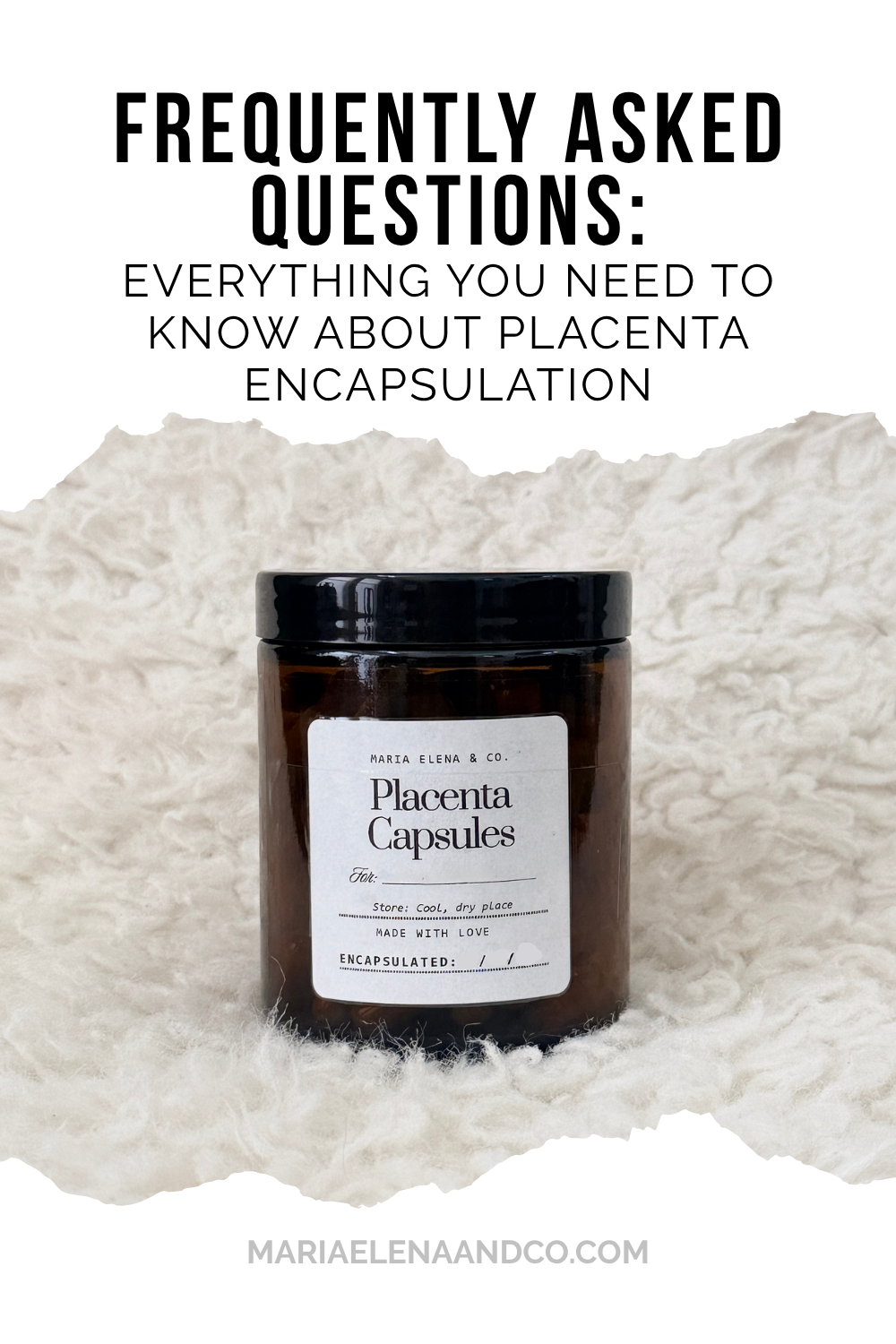
Frequently Asked Questions: Everything You Need to Know About Placenta Encapsulation
Planning for your postpartum recovery brings up a lot of questions—especially when it comes to reserving, handling, and preparing your placenta.
To help you feel completely confident and prepared, here are answers to the most common questions families ask about our placenta encapsulation, keepsakes, and safety protocols.
Booking, Turnaround & Delivery
When should I book my service?
Because we prioritize absolute safety and individual care, we only handle one placenta at a time in our dedicated facility. Space is strictly limited each week. Depositing early guarantees your spot on our calendar during your estimated birth week.
Why is a deposit required?
Your deposit locks in your birth week on our schedule so we are ready when you go into labor. Because we never double-book clients during the same week to ensure single-client focus, deposits are non-refundable.
How do I get my placenta to you?
We do not offer shipping or postal mailing.
Standard Drop-Off (Free): Your partner, family member, or trusted adult drops off your chilled placenta directly to our doorstep in South Jordan, Utah.
Pick-Up & Delivery Service ($50 Flat Rate): If notified in advance and depending on schedule availability, we can pick up your placenta from your birth location and hand-deliver your finished order back to your home.
How long does processing take?
Standard Turnaround: 7 to 10 days from the day we receive your placenta.
Expedited Processing: Can shorten turnaround to 3 to 5 days for an additional $50 fee, depending on the package chosen and which specific keepsakes require detailed artist attention (such as hand-drawn prints or resin work).
Hospital & Labor Questions
Will the hospital release my placenta to me?
Yes! You have a legal right to keep your placenta. Tell your doctor or birth team upon admission that you plan to take your placenta home. You may need to sign a standard release form.
What if the hospital sends my placenta to pathology for testing?
If your placenta is sent to pathology for medical testing, it is no longer safe or eligible for encapsulation. Hospital testing chemicals and protocols contaminate the organ. If the care team only needs a small piece of tissue, ask them to slice a tiny sample from the placenta while keeping the main body intact and chilled in your room.
Can I encapsulate if I have a C-Section, Epidural, or Induction?
Yes, absolutely! C-sections, epidurals, pitocin, or other standard labor medications do not prevent you from safely encapsulating your placenta.
What if I test positive for GBS or have Meconium?
Yes, it is still safe. Because we use the Traditional Chinese Medicine (TCM) method—which includes steaming the placenta thoroughly before dehydration—heat destroys bacteria and viruses. The placenta is also thoroughly washed and prepped before steaming.
What if I practice delayed cord clamping?
Delayed cord clamping is completely compatible with encapsulation and cord keepsake preservation.
Ingredients, Safety & Quality
What ingredients do you use in your capsules and art?
We pride ourselves on using top-notch, organic, and ultra-pure ingredients:
Organic Herbs: The herbs used in our Herbal Placenta Encapsulation are organic and mostly grown right on my own property without any pesticides or chemicals.
Natural Prints: For our Placenta Art Prints, we use natural beet powder for a soft, rich hue rather than synthetic dyes, accenting the finished print with watercolors and hand-drawn birth month flowers.
Resin & Mica: Our Heirloom Cord Keepsakes are triple-coated with radiant gold mica and sealed in crystal-clear hard resin for lifetime durability inside a floating display frame.
Is your workspace safe and sanitary?
Yes, absolutely. Because we process only one placenta at a time, there is zero risk of cross-contamination or mix-ups. All workspace surfaces, stainless steel equipment, and tools undergo strict medical-grade sanitization before and after every client following food safety protocols.
Does the placenta store toxins?
While the placenta acts as a filter during pregnancy, its main role is a facilitator—it transfers wastes back into the mother's bloodstream to be disposed of by her liver and kidneys. Toxins do not accumulate in the placenta tissue.
Chilling, Freezing & Storage
How should the placenta be stored immediately after birth?
On Ice Right Away: Place your placenta in double zip-top bags or a leak-proof container, then place it inside a clean cooler completely filled with ice.
In the Fridge: If processing begins within 3 to 4 days, keep it constantly chilled on ice or in a refrigerator.
Freezing: If processing is delayed, freeze it. A properly frozen placenta can stay preserved for up to 5 years for encapsulation or tincture preparation.
Capsules & Daily Usage
How many pills will my placenta make?
Capsule yield varies based on the size of your placenta itself. Typically, a single placenta yields anywhere between 70 to 120 capsules.
How do I take and store my placenta capsules?
Every order includes a laminated care and dosage card placed right inside your package. This card gives you an easy, durable reference for daily usage guidelines and proper storage:
Days 1–7: Take 2 capsules, 3 times a day (Morning, Noon, Evening).
Days 8–15: Take 1 capsule, 3 times a day.
Days 16+: Take 1 to 2 capsules in the morning as needed for energy or emotional support.
Your capsules will remain shelf-stable for months when stored in a cool, dark, and dry place. For long-term preservation beyond your immediate postpartum recovery, a Placenta Tincture preserves the beneficial properties indefinitely.
Ready to Reserve Your Birth Week?
Space on our calendar is strictly limited to ensure every placenta receives our undivided focus, time, and care.